The security guard business in Canada has changed quickly over the last few years. Clients expect more than a uniform at the door: they want licensed, well-trained officers, clear reporting and security that works alongside their cameras and access systems. These Canadian security industry trends took hold in 2025 and continue to shape how businesses, strata corporations and property managers in British Columbia buy security today.
1. Licensing and Compliance Are Under the Spotlight
Security work is regulated provincially, and BC continues to modernize how licences are issued. Applications and renewals now run through the province’s online Security Services Platform, with identity checks through the BC Services Card account. Training records are changing too: the Justice Institute of British Columbia stopped issuing paper Basic Security Training certificates after December 15, 2025, and now verifies completion directly.
For clients, the trend is clear — more buyers ask for a company’s business licence number and want proof that every guard on their site is licensed. Our BC security license renewal guide explains how licensing works for guards.

2. Guards and Technology Working Together
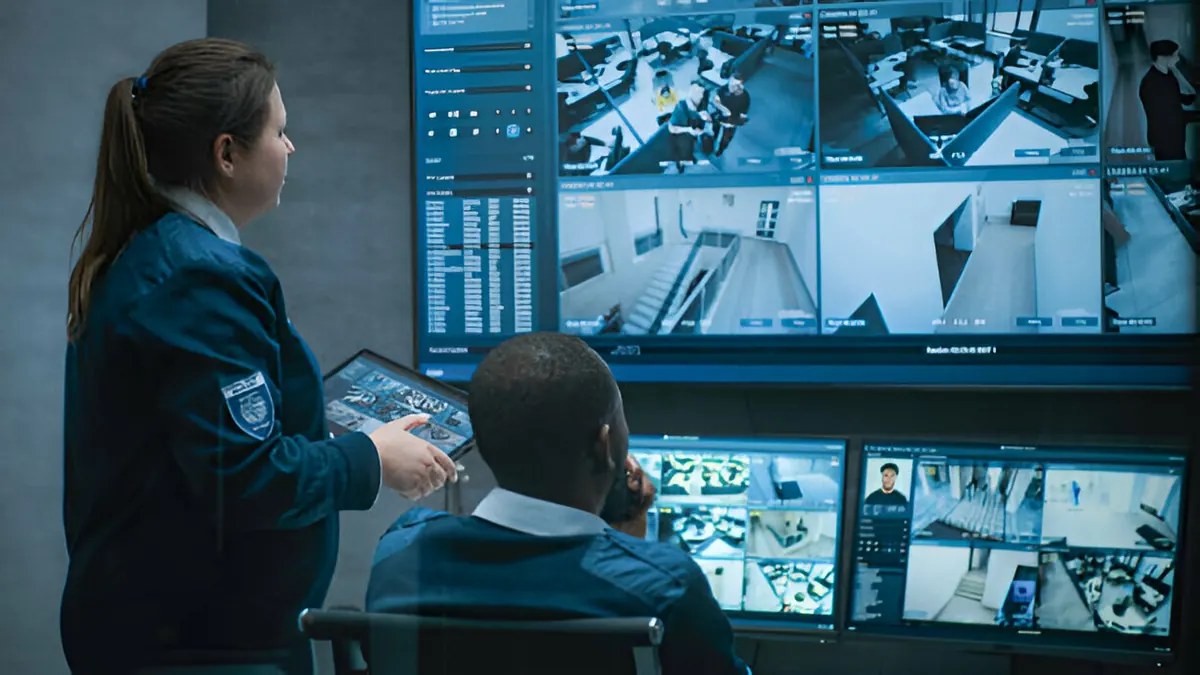
Cameras, access control and alarm systems keep getting smarter and cheaper. But technology records and alerts; it does not walk over, ask a question or help someone in an emergency. The strongest security programs now combine both: technology to watch more areas, and licensed guards to verify, deter and respond. We compare the two in security guard vs CCTV.
3. Growing Demand for Mobile Patrols
Not every property needs a guard on site all night. Mobile patrols — scheduled and random visits to several properties — give owners a visible presence and regular checks at a lower cost than a full-time post. Patrols are especially popular for strata parkades, industrial yards, vacant buildings and construction sites. Learn more about mobile patrol security.
4. Concierge Security in Residential Towers
As more people live in high-rise buildings across Metro Vancouver, strata councils and property managers increasingly choose concierge security: a licensed officer who greets residents, manages deliveries and contractors, and controls access at the front desk. Read why concierge security suits luxury residences.
5. Construction, Fire Watch and Vacant Property Coverage
Construction activity and building upgrades mean more sites with fire protection systems that are not yet working or temporarily shut down. Fire departments expect protection to be maintained during those periods, which keeps demand for fire watch guards steady. See when a fire watch is required in BC.
6. Retail Theft and Loss Prevention
Retailers continue to invest in loss prevention — from store layout and staff training to uniformed guards at entrances during peak hours. The focus has shifted toward safety: observe, document and call police, rather than confrontation. Our article on retail loss prevention strategies covers what works.
7. De-escalation and Customer Service Skills
Most incidents a guard faces are solved by communication, not force — and in BC, security workers may not carry batons, pepper spray or tasers. Clients now expect officers who can calm a tense situation, give clear directions and represent their business professionally.
8. Privacy Expectations
Security involves personal information: visitor logs, incident reports and camera footage. In British Columbia, private organizations are covered by the Personal Information Protection Act (PIPA). Clients increasingly ask how their security provider collects, stores and shares that information.
9. Clear Reporting and Accountability
Property managers want to see what their security team actually did: patrol times, incidents, follow-up and recommendations. Detailed daily logs and prompt incident reports are now a basic expectation rather than an extra.
What These Trends Mean for Your Business
- Check that your provider holds a BC security business licence and that every guard is licensed.
- Combine guards with the cameras and access control you already have.
- Use patrols where a full-time post is not needed.
- Ask for sample reports before you sign a contract.
- Review your coverage at least once a year with a security risk assessment.
How the Security Industry Is Changing for Guards
The security industry asks more of front-line officers than it did a few years ago. Guards are expected to write clear digital reports, communicate well with the public, understand privacy rules and work alongside camera and access systems. For people joining the security industry, that means customer service and report writing matter as much as presence. For employers, it means better training and closer supervision.
How the Security Industry Is Changing for Clients
Clients in the security industry are more informed buyers. They compare licence numbers, ask for sample reports, expect a single point of contact and want coverage that adapts to their site — more guards for events and holidays, patrols instead of static posts overnight, fire watch during shutdowns. Contracts increasingly focus on outcomes, such as fewer incidents and faster response, rather than just hours on site.
Security Industry Trends for BC Businesses
- Strata and residential towers: growing use of concierge security and overnight patrols.
- Construction: steady demand for site security and fire watch during building and renovation work.
- Retail: a focus on deterrence and safe loss prevention practices.
- Events: more planning around entry points, crowd management and emergency procedures.
- Compliance: closer attention to licensing, privacy and documentation.
Preparing Your Business for the Next Security Industry Shift
You do not need to chase every new product to keep up with the security industry. Review your risks once a year, make sure your provider is licensed and reports clearly, combine guards with the technology you already own, and adjust coverage as your site changes. Businesses that do these four things stay ahead of most security industry trends without overspending.
Frequently Asked Questions
What are the biggest Canadian security industry trends?
Stronger licensing and compliance expectations, guards working alongside technology, demand for mobile patrols and concierge security, fire watch for construction and system shutdowns, and a focus on de-escalation, privacy and reporting.
Will technology replace security guards?
Technology extends what a security team can watch, but it cannot replace a trained person who can verify an alarm, deter an intruder or help people in an emergency. Most sites get the best results from a combination of both.
Do security guards in BC need a licence?
Yes. Every security worker in BC needs a BC security worker licence, and the business must hold a security business licence.
Security that keeps up with the industry. Trans World Security Services Ltd. has provided licensed security across BC since 2003. Request a free quote or call 778 855 3065.