Running a business today comes with constant pressure—sales targets, customer expectations, and one silent threat that many owners underestimate: security risks. Imagine reviewing your CCTV footage after closing hours and seeing a theft happen… clearly recorded, yet completely unstoppable.
This is where the debate of security guard vs CCTV becomes more than just a comparison—it becomes a critical business decision.
Many business owners assume cameras are enough. Others rely solely on manpower. But what actually protects your business when it matters most?
In this guide, we’ll break down the real differences, risks, and outcomes so you can make the smartest decision for your security.
Understanding CCTV Security Systems
CCTV (Closed-Circuit Television) systems have become a standard feature in modern businesses. From retail stores to warehouses, cameras are everywhere.
What CCTV Does Well
CCTV systems are excellent for:
- Monitoring activity in real-time
- Recording incidents for later review
- Acting as a passive deterrent
- Providing evidence for investigations
For many businesses, this seems like enough. But the reality is different.
The Hidden Limitations of CCTV
Here’s what most business owners don’t realize:
- No real-time intervention – Cameras only watch, they don’t act
- Delayed response – You discover incidents after damage is done
- Blind spots exist – Not all areas are covered
- Easy to bypass – Experienced criminals know how to avoid cameras
A camera might capture a theft—but it won’t stop it.
👉 See how layered security improves safety.
Understanding Security Guards
Now let’s talk about the human side of security.
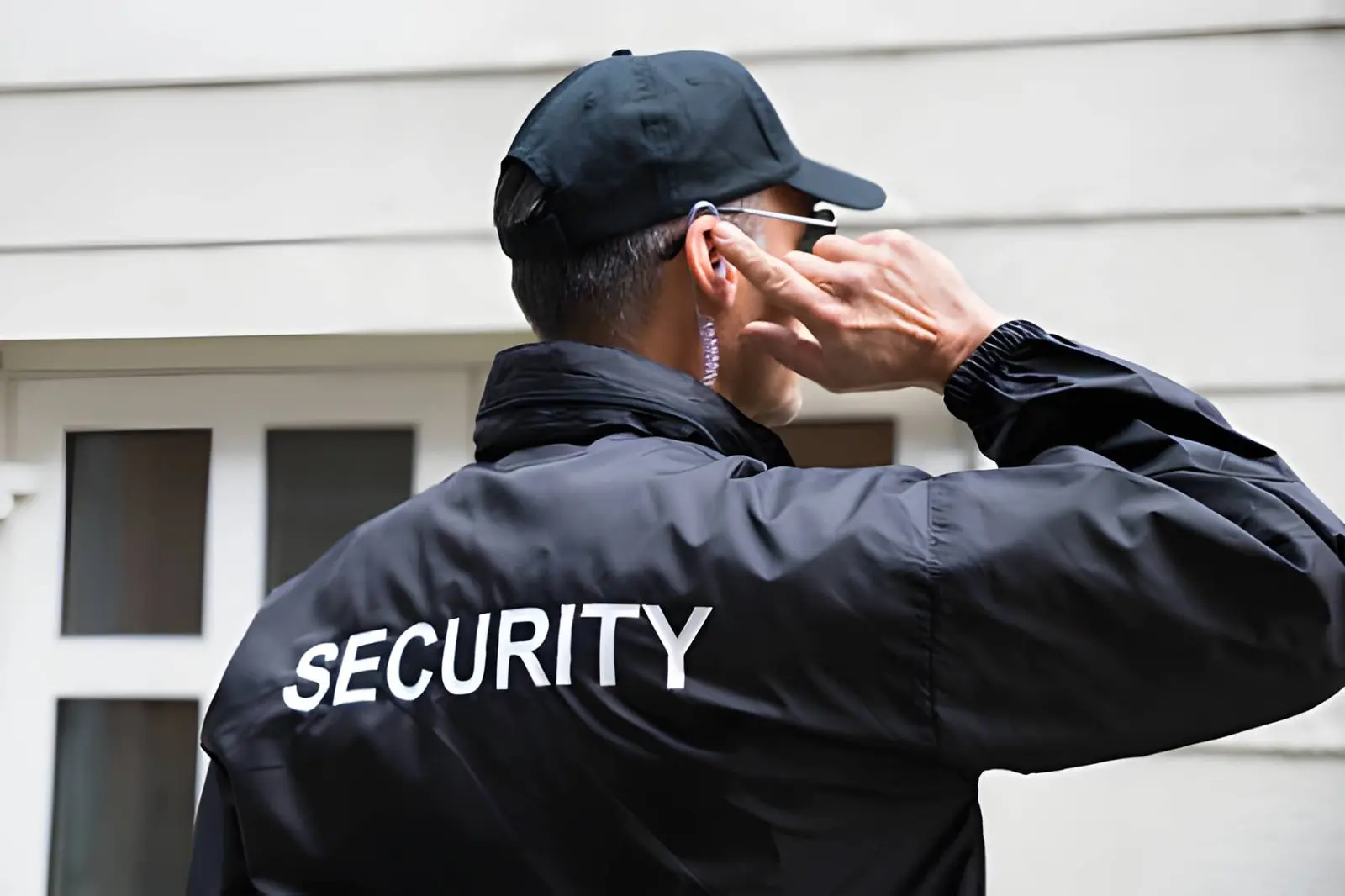
Professional guards bring something technology cannot: presence, judgment, and action.
What Security Guards Actually Do
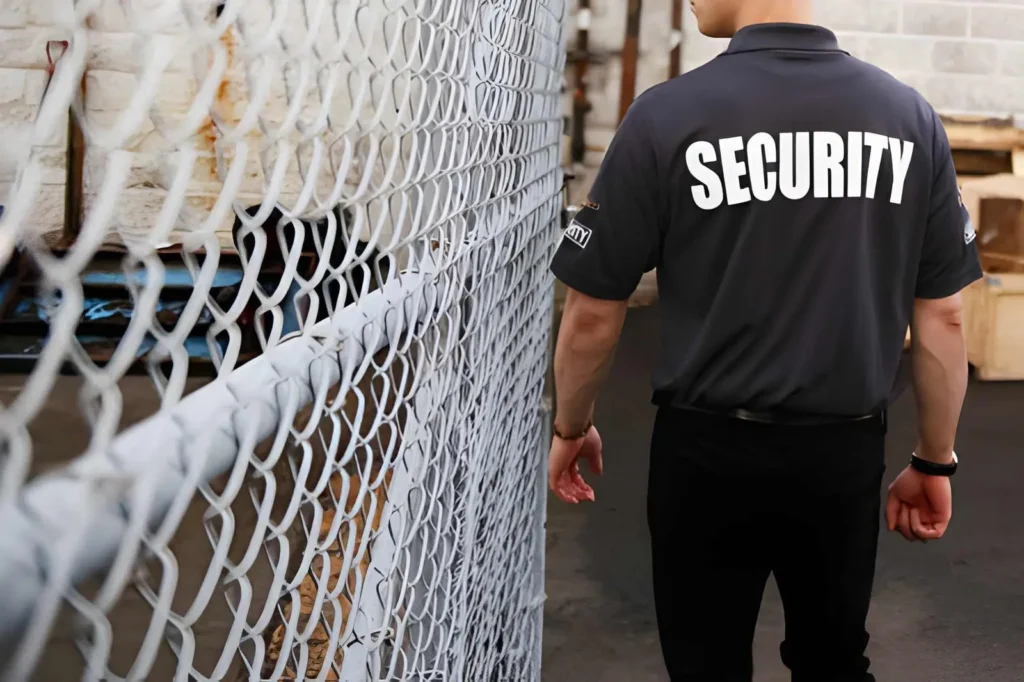
- Monitor entrances and exits
- Handle suspicious behavior immediately
- Respond to emergencies in real-time
- Interact with customers and staff
- Prevent incidents before they escalate
This is where manned security vs surveillance becomes a clear contrast.
Why Presence Matters
A uniformed guard sends a strong message:
“This place is protected.”
Criminals don’t like risk. A visible guard increases that risk instantly.
Explore trusted solutions at Trans World Security Services Ltd..
Security Guard vs CCTV – Key Differences
Let’s break down this business security comparison in a simple and practical way.
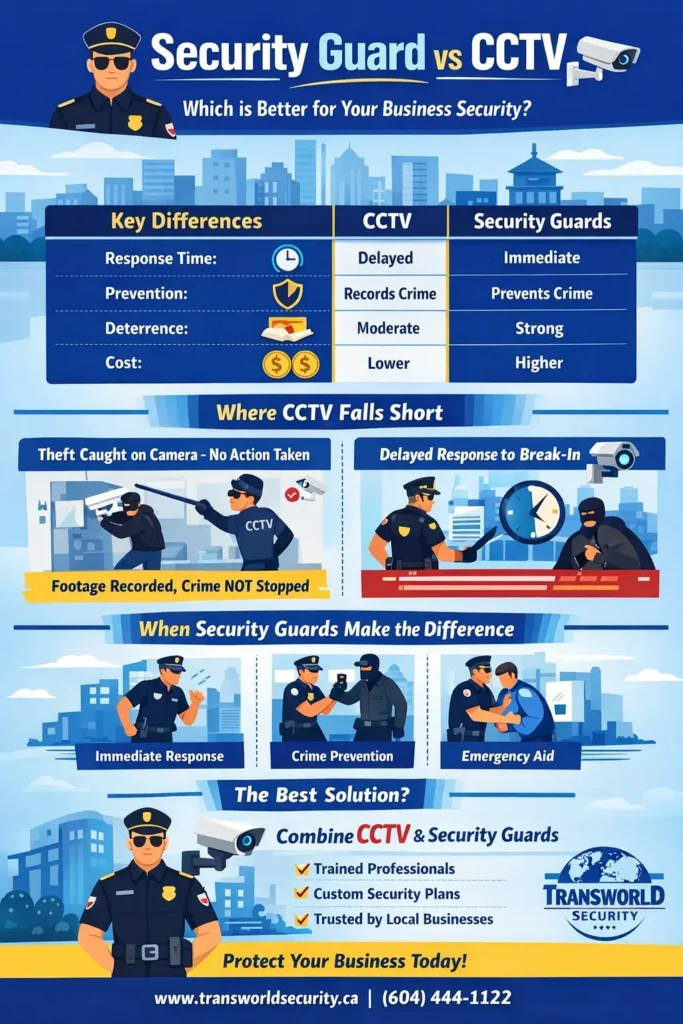
When it comes to prevention, CCTV systems are limited. They act as a passive tool, meaning they can only monitor and record activity. On the other hand, security guards actively prevent incidents. Their presence alone can stop suspicious behavior before it turns into a crime.
Looking at response time, CCTV always reacts late. It shows you what already happened. Security guards, however, respond instantly. Whether it’s suspicious activity, a conflict, or an emergency, they take action in real time.
Another major difference is human judgment. Cameras cannot think, analyze, or make decisions. They simply record footage. Security guards use training and experience to assess situations and respond appropriately, which makes a huge difference in high-risk situations.
When it comes to evidence, both CCTV and guards play a role. Cameras provide recorded footage, while guards can give detailed reports and eyewitness accounts. Together, they strengthen investigations.
In terms of deterrence, CCTV offers moderate protection. Criminals may still take risks, especially if they know how to avoid cameras. A security guard, however, creates a strong visible deterrent. Most criminals avoid locations where they see an active security presence.
Lastly, consider interaction. CCTV systems cannot communicate or assist people. Security guards can guide visitors, help employees, and handle situations directly, adding an extra layer of safety and professionalism.
The Reality
CCTV helps you see what went wrong.
Security guards help ensure nothing goes wrong in the first place.
That’s the real difference—and the core of the security guard vs CCTV debate.
Real-World Scenarios Where CCTV Fails
Scenario 1: Retail Theft
A shoplifter walks in, scans the store, avoids visible cameras, and steals items.
- CCTV records everything
- No one stops the theft
- Loss = direct financial damage
Scenario 2: After-Hours Break-In
A warehouse gets broken into at night.
- Cameras capture masked individuals
- Police arrive after the incident
- Damage already done
The Real Cost
- Lost inventory
- Insurance complications
- Business disruption
- Emotional stress
This shows the limitation of relying only on security system effectiveness through cameras.
👉 Need real-time protection? Contact Us.
When Security Guards Make the Difference
Now let’s flip the situation.
Scenario 1: Suspicious Behavior
A guard notices unusual activity near an entrance.
- Intervenes immediately
- Prevents potential theft
- Maintains order
Scenario 2: Emergency Situation
Fire alarm or conflict occurs.
- Guard responds instantly
- Assists evacuation
- Contacts emergency services
Why This Matters
This is real-time threat response—something CCTV simply cannot provide.
Discover proactive security options at Trans World Security Services Ltd..
Security Technology vs Manpower – What Works Best?
This isn’t about choosing one over the other blindly.
It’s about understanding:
- Cameras provide visibility
- Guards provide action
The Smart Approach
Businesses today are moving toward layered security systems:
- CCTV for monitoring
- Guards for prevention and response
This combination improves overall security risk management.
Learn more about combined solutions at Trans World Security Services Ltd..
Choosing the Right Security for Your Business
Every business is different.
Retail Stores
- High theft risk
- Benefit more from visible guards
Offices
- Controlled access needed
- Combination works best
Warehouses
- After-hours vulnerability
- Guards + cameras recommended
Key Factors to Consider
- Location risk level
- Business size
- Operating hours
- Budget
Making the right decision here can prevent serious losses.
Why Businesses Trust Trans World Security Services Ltd.
When it comes to choosing between security camera vs guard, experience matters.
Trans World Security Services Ltd. offers:
- Highly trained professionals
- Customized security plans
- Reliable on-site presence
- Proven crime prevention strategies
Businesses trust them because they don’t just monitor threats—they stop them.
Follow updates and community safety tips at Trans World Security Services Ltd.’s Facebook Page.
The Truth About Crime Prevention Methods
Let’s be honest.
Criminals are smart. They:
- Study camera placements
- Exploit blind spots
- Strike when response is delayed
But they avoid:
- Human interaction
- Immediate confrontation
- Visible authority
This is why guard vs camera security is not an equal fight.
The Emotional Reality Business Owners Face
Security isn’t just about assets.
It’s about:
- Your employees feeling safe
- Your customers trusting your space
- Your peace of mind
One incident can damage your reputation overnight.
And the worst part?
Most of these incidents are preventable.
So… Security Guard vs CCTV – Which One Wins?
If you’re looking for a simple answer:
- CCTV alone is not enough
- Guards alone are powerful
- Together, they are unstoppable
The best businesses don’t choose—they combine.
👉 Protect your business today by Contacting Trans World Security Services Ltd..
Protect What You’ve Built
You’ve invested time, money, and effort into building your business.
Don’t let a preventable security gap put everything at risk.
A camera might show you what went wrong.
But the right security team ensures it never happens in the first place.
FAQs
Is CCTV enough for business security?
No, CCTV alone is not enough. It records incidents but does not prevent them. Businesses need active security measures for real protection.
Are security guards better than cameras?
Security guards provide real-time response and prevention, making them more effective in stopping crime compared to cameras alone.
What is the best security solution for small businesses?
A combination of CCTV and professional guards offers the best balance of monitoring and protection.
Do security guards prevent crime better than CCTV?
Yes, guards actively deter and prevent crime through presence and immediate action, unlike passive surveillance systems.